Financial Guidance for Gen Z: Your First Step Into The Real World
- 2 days ago
- 6 min read
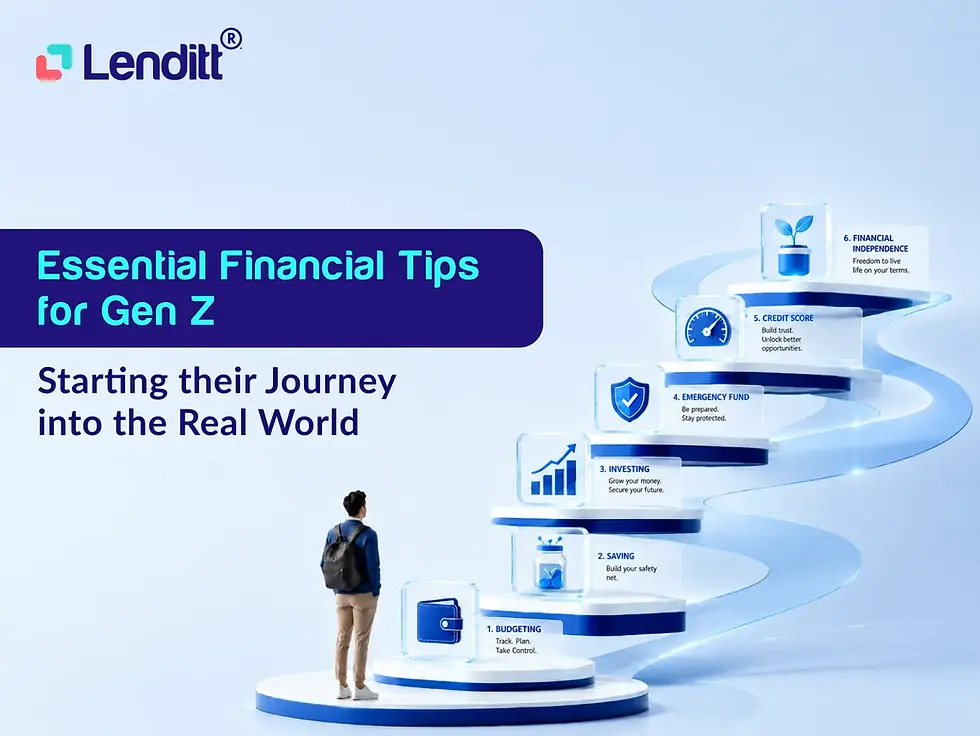
Generation Z, or Gen Z, is the first generation to have never known a world without the internet and to value diversity. From carving their own path to standing for themselves, Gen Z is the most admired generation right now.
So, today, we will discuss something way cooler than the financial stress - The Financial Freedom, Your Financial Freedom, Financial Freedom for Gen Z’s like you!
Let’s break it down in Gen Z style!
What is Financial Freedom?
In simplest words, financial freedom means having enough money to live your life without financial stress. This blog teaches you exactly how you can break through financial blockages and live your life your way with abundance.
The Misconception of How Financial Abundance is Achieved
The process of achieving financial abundance is the exact opposite of what people describe. Yes, that’s true! There’s often a misconception in society that the richer you are, the more financially abundant you are! But the real truth is, the more financially responsible you are, the more financially abundant you are!
Your financial behaviour highly reflects how your parents behave in financial matters. It frames your future financial behaviour, which can either drive you towards abundance or leave you broke. But you always have the power to change how you view finances and reframe them to achieve financial success.
In simple words, no matter how much you earn, if you do not adopt a wise attitude toward your finances, financial abundance will only be a dream to you.
Mastering the Art of Budgeting
Imagine getting paid on salary day and, within 5 days, wondering where all your money went. This is what can actually happen when your money is not directed properly and lacks proper financial planning.
The 50/30/20 Rule: Trust us. This fundamental rule for managing your finances will change the entire financial landscape of your life. Under this rule, you divide your salary into three major categories as follows:
Where 50% of your monthly income goes toward your needs (rent, groceries, food, travel expenses, etc.)
Where 30% of your monthly income goes towards your wants (monthly OTT subscriptions, dining out, shopping, movies, shows, etc.)
Where 20% of your monthly income goes towards savings (emergency funds, investments, etc.)
Having a monthly spending plan is a strategy that can help you utilise your money in the best possible way so that you don’t end up broke before your next salary day.
Budgeting for the first time might look confusing and make no sense at all. But remember, consistency is the key. As you venture into budgeting, you will find a solution that works for your life.
Declutter Your Finances
Earning money is an awesome feeling, and so is spending money and buying your favourite stuff. But when money is flowing in a direction that does not fulfil your long-term financial goal, financial freedom will stay at bay.
Decluttering your finances is essential when you want to put your money to real use. Start tracking your money in real time for a few weeks. See where your money is flowing. Identify bad spending habits and redirect the money saved from them in a fruitful direction. Within days, it will become second nature for your brain to direct money towards financial freedom.
Use Money Tracker Apps: Gen Z is pro at finding the best app solutions for everything. Right? Find out the best app to make your budgeting a fun task.
Financial Minimalism: A concept that helps you manage your money and save up more. It helps you declutter your money and redirect it towards rewarding goals like investment and emergency
Credit Score- Your Financial Report Card
Suppose you want to take a loan from a lender. You don't know the lender personally, and neither does your lender. How would your lender trust you with his money? That’s where a credit report helps them analyse your financial capacity as well as your financial behaviour.
A credit report includes,
Your past payment history
The amount of money you have borrowed
Length of credit history
New credit inquiries
A credit report summarises your financial reliability in a three-digit number. The ranges are:
300-579: Poor
580-669: Fair
670-739: Good
740-799: Very good
800-850: Excellent
Whether a bad or good habit, each financial habit you adopt will reflect on your credit report. Making timely repayments and limiting your credit card use would help maintain a good credit score. If you procrastinate, your EMIs can negatively affect your credit report.
Note: The higher the credit score, the better the chances of securing a loan at affordable rates.
Fund for Emergencies
Saving money is both the best and hardest habit to cultivate daily. Life happens, and having a good financial backup is always worth pursuing. It neglects the need to borrow money in an emergency, and sometimes you only need to borrow a little money.
Automate Your Savings: Promise yourself to add a specific amount to your emergency fund on a monthly, weekly, or biweekly basis. Even a small amount can yield good savings over a specific period when done consistently.
Thumb rule for Savings: You should have 3 to 6 months of living expenses saved for emergencies.
Understand Debts
Debt is money you borrow from financial institutions like traditional banks, credit unions, or digital lenders.
Instant personal loan offer quick funding for your personal purposes. They are quite affordable and provide financial relaxation in emergencies. But when you borrow money unnecessarily, it only puts a load on your pocket. So, it is necessary to understand the key difference between good debt and bad debt.
Good Debt: Debt can be considered good when you borrow for a purpose that contributes to your long-term financial goals. A loan taken for educational purposes or building a business can be considered good debt. Reasonably, it will add value to your personal and financial development.
Bad Debt: Bad debt occurs when borrowing money lacks a solid purpose for its end use, such as shopping.
Invest Your Money
Yes. Gen Z should also start investing today. Investment has nothing to do with you being rich or old. Investments can yield good returns over time. The earlier you start investing, the larger returns you can expect sooner.
Financial Education
Financial freedom is not a thing that can happen overnight by adopting a few good financial habits. While the world changes constantly, we, as humans, need to adopt new habits that align with current global trends. Nowadays, podcasts have become Gen Z’s favourite way of education, where knowledge and fun go together. You can educate yourself about finance by watching good podcasts online. You can even read blogs and books if you are more comfortable with reading, just like you are reading this blog.
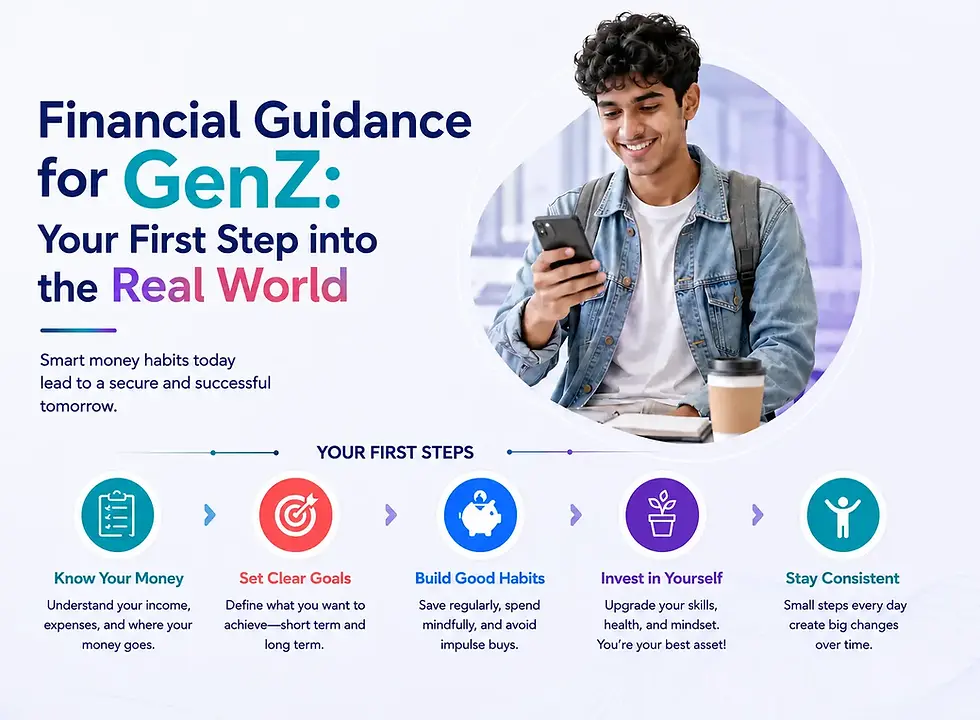
Everyday Small Changes for a Big Financial Dream of GenZ
Check your subscriptions: Nowadays, everyone prefers to set up auto-pay for their monthly entertainment subscriptions because it saves time and effort. Sometimes, we forget to stop auto-payments when we are not using that entertainment platform. Consider pausing subscriptions when not in use.
Not chasing trends: Gen Zs are known for setting their own styles, right? Gen Zs are not supposed to copy others' lifestyles just because everyone is doing it. Find the balance between trends and your pockets for a financially healthier lifestyle.
The One Week Rule for Impulse Purchases: If you find yourself regretting after buying something in excitement, trust us, every generation goes through this silent pain.
But here’s a tiny and practical solution.
Next time, whenever you feel like purchasing something just because it’s cute or seems exciting, take 24 hours to one week before making a purchase. If you still feel like buying it, then definitely purchase it with a purpose.
Build Side hustles: Building your side hustle would provide additional financial independence and help you grow personally and professionally. Also, having an activity keeps fueling your everyday life with passion and joy.
Conclusion
Knowing the rule simply is not gonna help you. Start implementing it in your real life today. And, see the REAL benefits.
The End Note: You do not need to earn billions to feel financial freedom; you just need consistent, small, good habits.
Frequently Asked Questions
What is financial freedom for Gen Z?
Financial freedom for Gen Z means having enough money to cover everyday expenses, save for future goals, and handle emergencies without constant financial stress. It is achieved through budgeting, saving, investing, and consistently making smart financial decisions.
How can Gen Z start managing money wisely?
Gen Z can start managing money by creating a monthly budget, tracking expenses, avoiding unnecessary spending, building an emergency fund, and setting aside a fixed percentage of their income each month.
What is the 50/30/20 budgeting rule?
The 50/30/20 budgeting rule divides your monthly income into three categories: 50% for essential needs, 30% for personal wants, and 20% for savings or investments. It is one of the easiest budgeting methods for beginners.
Why is budgeting important for young adults?
Budgeting helps young adults control spending, avoid living paycheck to paycheck, save for future goals, and reduce financial stress. It also creates healthy money habits from an early age.
How much should Gen Z save for an emergency fund?
Financial experts generally recommend saving three to six months' worth of living expenses in an emergency fund. Even small, regular contributions can gradually build a strong financial safety net.